Conspiracy theory / Urban legend
Apollo Moon-Landing Hoax Claims, Debunked One by One
This article summarizes what the featured video claims. It does not present those claims as established fact. Read the Japanese version.
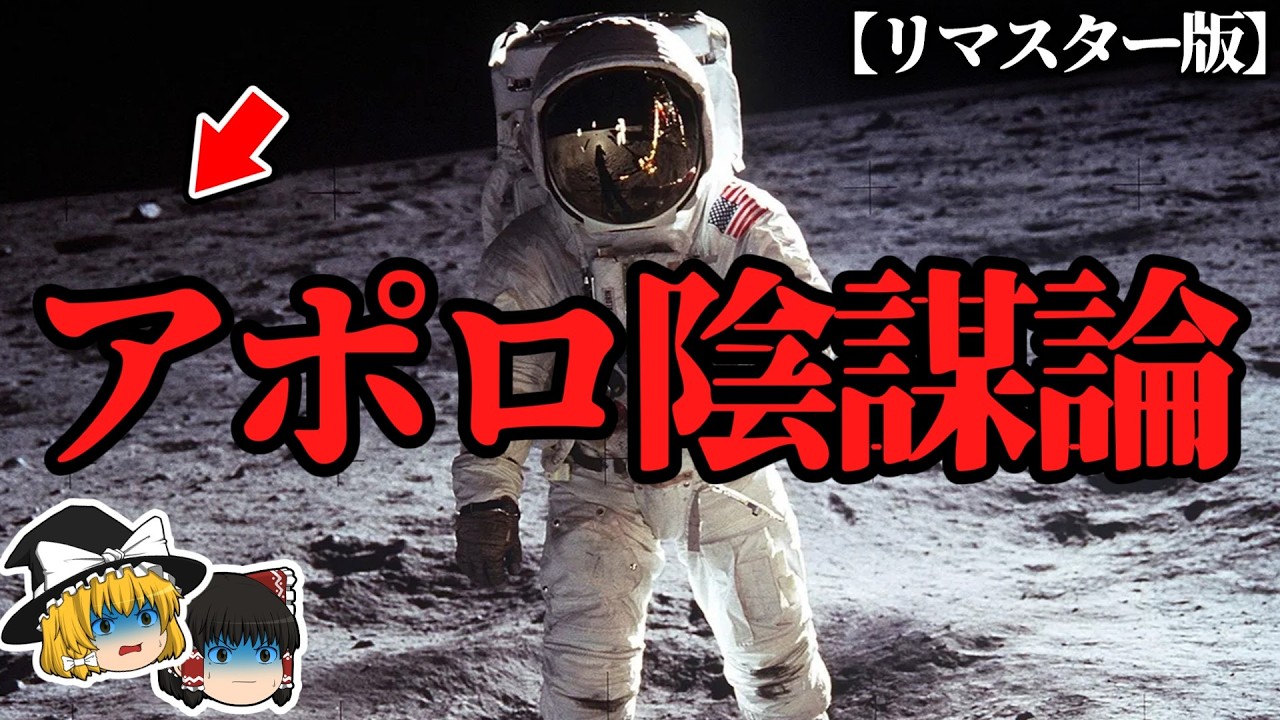
The conclusion remains consistent: ‘They went.’ The video ends by arguing that every supposed basis for the claim that humans did not reach the Moon has been answered scientifically and logically.
Where did the hoax theory spread from?
It divides Apollo conspiracy theories into two kinds: the moon-hoax claim that no landing occurred, and a concealment claim that an encounter was hidden. As the starting point for the former, it cites Bill Kaysing's self-published 1974 book *We Never Went to the Moon*, which the author claimed sold 30,000 copies.
A British television program later cited as evidence was, the video says, made as an April Fools' joke. Astronaut names were deliberately wrong, actors and their roles appeared in the credits, and the production date was April 1. It also says the French production *Opération Lune* was a mockumentary constructed by alternating real statements from U.S. officials with those of fictional people, and that its presenter explicitly called it a joke program.
Physical answers to the flag and footprints
The flag appears to wave because there is no air resistance in a vacuum, so it moves easily and takes longer to stop—not because a wire was hidden inside. The video explains that a telescoping horizontal bar supported the nylon flag. It says footprints remain sharply defined because regolith has not been weathered by air or water and its grains have not become rounded, allowing it to hold together. Astronauts could not jump very high because a suit weighing about 80 kilograms on Earth still weighed about 13 kilograms on the Moon and made bending the joints difficult. As for the letter ‘C’ seen on a Moon rock, it is absent from NASA's original photograph and is out of focus relative to the rock, so the video considers dust or hair introduced during printing the most likely explanation.
Evidence left by later lunar missions
Japan's Kaguya photographed Apollo 15's exhaust trace in 2008, and NASA's LRO photographed the Apollo 11, 15, 16, and 17 landing sites and footprints in 2009. The video presents these as strong evidence against the hoax claim. Original magnetic tapes once described as missing were later found at an Australian university, which it frames as poor management rather than concealment.
Viewer reactions
“Why do people turn to conspiracy theories when there is this much evidence? I don't understand it.”
4 likes
“The 2024 film *Fly Me to the Moon*, which turns the conspiracy theory on its head, was fun. I went to see it twice 😊”
3 likes
“Hmm. I do think they went, but why does something still feel unresolved? 😂 Maybe because the human world is full of lies? Perhaps even truth gets turned into a lie. I can no longer tell what is false and what is real. That is the human world.”
3 likes
“I laughed at the casual Gundam X reference 😅 Even when conspiracy theorists are scientifically refuted, they make excuses and refuse to listen. It is astonishing.”
3 likes
“The Moon split away from Earth, so Moon rocks are not very different from rocks on Earth. Not a very romantic story.”
3 likes
Following the theory
Why does the flag seem to move? Why are the footprints so deep, and why are there no stars in the sky? Following each apparent oddity used to support the hoax theory brings the physics of the flag and regolith—and later lunar-orbit missions—into view. Accumulated counterevidence redraws, from within, the outline of a question repeated for more than half a century.
Watch the video
オカルト好きの秘密基地【ゆっくり解説】
Key moments
- ▶ 7:10
Apollo conspiracy theories are divided into two types: the moon-hoax claim that no landing happened and a claim that an encounter was concealed.
- ▶ 7:54
The video identifies Bill Kaysing's self-published 1974 book *We Never Went to the Moon* as the starting point and says the Flat Earth Society was the first organization to make the claim.
- ▶ 8:27
It points out that a British TV program cited as evidence was made as an April Fools' joke, with actors named in the credits and an April 1 production date.
- ▶ 10:00
The French production *Opération Lune* is described as a mockumentary alternating remarks by real officials with fictional characters, whose presenter said it was a joke program.
- ▶ 17:51
The video says the flag appears to move because motion persists without air resistance in a vacuum, and rejects a hidden-wire claim by explaining its telescoping horizontal support.
- ▶ 19:00
It says footprints remain sharp because unweathered regolith grains are not rounded, while astronauts could not jump high because their suits still weighed about 13 kilograms on the Moon and restricted their joints.
- ▶ 20:15
The ‘C’ on a Moon rock does not appear in NASA's original photograph and has a different focus, leading the video to suggest dust or hair entered during later printing.
- ▶ 25:26
The video treats images of Apollo 15's exhaust trace taken by Kaguya in 2008 and Apollo 11, 15, 16, and 17 sites and footprints taken by NASA's LRO in 2009 as decisive evidence.
Related topics
Found an error? Contact us.