Historical mystery / Urban legend
The Sanka: Japan's Unregistered Mountain People Between History and Legend
This article summarizes what the featured video claims. It does not present those claims as established fact. Read the Japanese version.
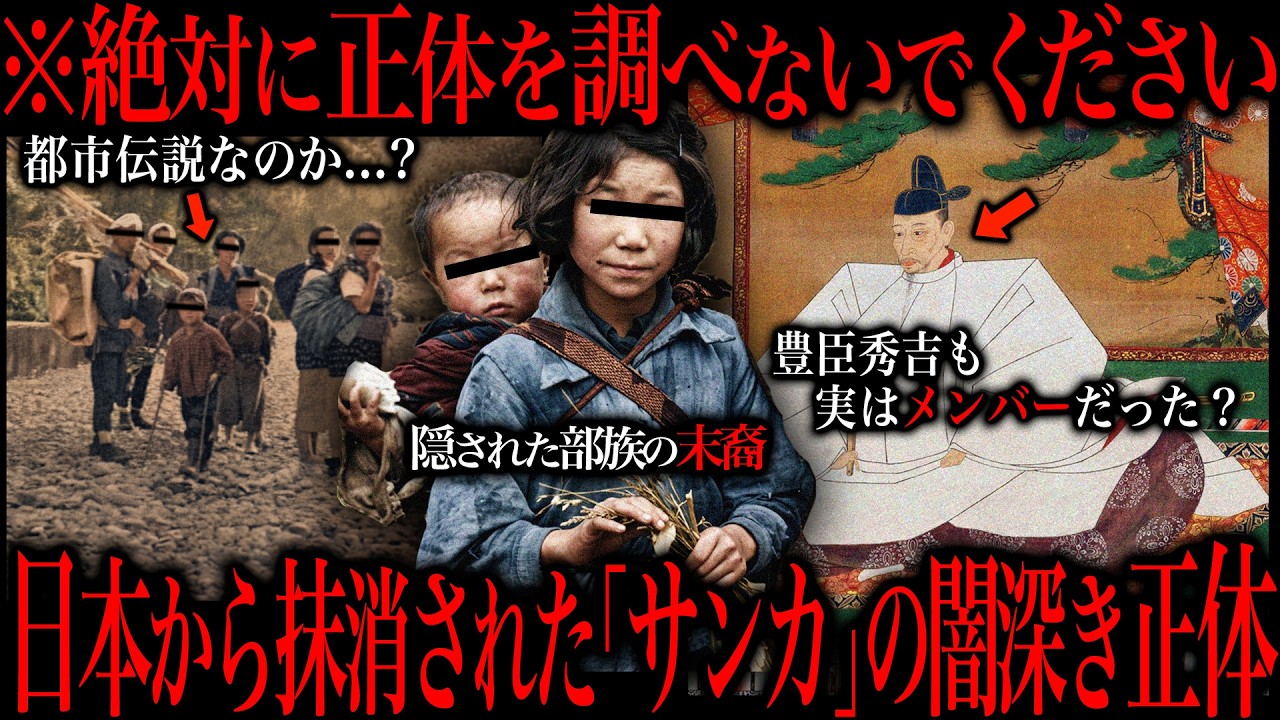
People without family registers once built temporary shelters by rivers and moved from mountain to mountain—or so accounts of the ‘Sanka’ from around Japan suggest. Yet almost no official records remain, and even if such people existed, the nature of the group is still unclear. The video untangles, in sequence, the traditions and inventions that entered this gap.
Life in riverside shelters and making winnowing baskets
It first presents records by ethnologists and fieldworkers who said they encountered people without family registers in the mountains. Works such as Tsuneichi Miyamoto's *The Forgotten Japanese* are cited, along with the possibility that 17th-century documents recorded similar people.
‘Sanka’ was not their own name but a term with discriminatory implications used by police and officials from the Meiji era onward. Names differed by region. They were said to make temporary riverside homes called seburi and move every few days or months while making and repairing winnowing baskets.
After World War II, family-registration and education systems made a mobile life harder to maintain. The video introduces the theory that they settled and blended into wider society: perhaps they did not disappear so much as the boundary ceased to be visible.
Prejudice directed at the ‘preaching robber’
Beginning in Ikebukuro, Tokyo, in 1926, the so-called ‘preaching robber’ became known for lecturing victims for hours about locks and watchdogs after taking their money. His agile escapes fueled rumors that he was Sanka, but the presenters say no firm evidence existed and prejudice against an unidentified mobile population came first.
In 1929, fingerprints identified a culprit who was not Sanka. The video treats the episode—in which an inexplicable crime was projected onto a scarcely documented, little-known group—as revealing how the Sanka were viewed.
From descendants of Izumo to Yatagarasu
The story then moves to a legend that the Sanka descended from the Kunitsukami or Izumo forces who refused to submit to the Yamato state after the transfer of the land and entered the mountains. A theory that they were descendants of Jomon people with little continental influence follows, but the video explicitly says neither is supported.
It also lists theories that Toyotomi Hideyoshi came from the Sanka, that they originated the ninja, and that they were the same secret organization as Yatagarasu. Mountain travel skills and the supposed absence of registers and legal names expand the story, but the presenters distance themselves by calling these almost entirely unsupported urban legends.
The video says novels and embellishments by a journalist and author strongly influenced today's image of the Sanka, and that later invention entered accounts of Sanka writing and specialized tools. Even so, a warning-like line attributed to ethnologist Keisuke Akamatsu—that an underground organization might survive even after its members blended into society—casts a dark afterimage over the end.
The presenters conclude that the lack of settled information likely allowed the stories to acquire details and grow.
Viewer reactions
“Sixty-five robberies and 29 thefts, yet parole for exemplary behavior—it must have been an extraordinary time.”
239 likes
“Honestly, I suspect they were simply farmers who became itinerants to escape taxes and formed groups. That mobile life then became a tradition and continued, which is something seen around the world.”
204 likes
“A mysterious ethnic group or lost people is exciting whether you hear about it as a child or an adult, haha.”
193 likes
“4:43 The Sanka did exist. My great-grandmother apparently met unsettled people living in the mountains and making farm tools from bamboo when she was young. She told my grandfather, and he told me.”
130 likes
“Kunio Yanagita's *The Legends of Tono*, a major work by the founder of folklore studies introduced in the video, also contains many stories about yamabito, or mountain people. It makes you think the Sanka really might have existed.”
122 likes
Following the theory
A shelter standing briefly near the sound of a river, baskets repaired from settlement to settlement, and names changing from place to place: beyond those small memories, larger stories of Izumo, ninja, and Yatagarasu accumulated. The thin record does not prove that the people never existed, but it also left room for almost any theory. What remains are fragments told by people who saw them, more than the voices of those who were named.
Watch the video
たっくーTVれいでぃお
Key moments
- ▶ 0:22
The video introduces the Sanka as people said to have moved through the mountains without family registers into the Showa era, while noting that scarce official records leave both their existence and character unclear.
- ▶ 1:45
Works by Tsuneichi Miyamoto and 17th-century documents are offered as records of contact, while the video explains that ‘Sanka’ was not the people's own name.
- ▶ 4:16
It depicts a way of life centered on temporary riverside shelters called seburi, movement every few days or months, and making winnowing baskets or bartering.
- ▶ 5:07
Rumors that the 1926 ‘preaching robber’ was Sanka are described as prejudice; fingerprints identified a culprit who was not Sanka.
- ▶ 7:04
The legend that the Sanka descended from the Kunitsukami or Izumo people who entered the mountains after the transfer of the land is presented as unsupported.
- ▶ 10:07
The story expands to theories about Toyotomi Hideyoshi's origins, the birth of ninja, and a shared organization with Yatagarasu, all treated by the presenters as weakly supported urban legends.
- ▶ 15:21
While explaining that novels and embellishment shaped today's image of the Sanka, the video closes on an ominous warning attributed to Keisuke Akamatsu about an underground organization surviving assimilation.
Related topics
Found an error? Contact us.