Disaster and accident / Japanese
The Hakkoda Mountains Disaster: Five Days That Killed 199 Soldiers
This article summarizes what the featured video claims. It does not present those claims as established fact. Read the Japanese version.
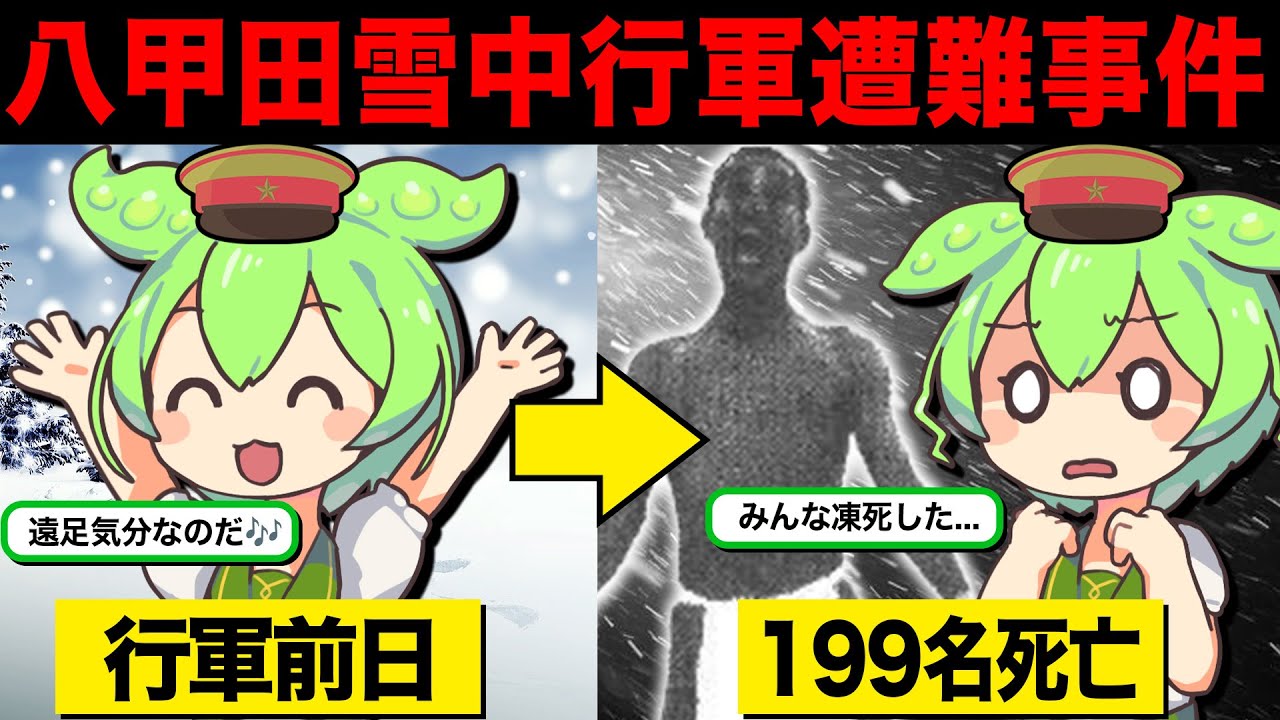
In January 1902, the 5th Infantry Regiment from Aomori set out on a winter training march in the Hakkoda Mountains.
Twenty kilometers each way to Tashiro Hot Spring
The video says the exercise was intended to test whether supplies could be moved by human power if coastal railways became unusable in a war with Russia. A total of 210 men joined a planned overnight round trip from Aomori to Tashiro Hot Spring, about 20 kilometers each way.
A preliminary exercise immediately beforehand had enjoyed clear weather, and farewell gatherings continued until the night before departure. The video says this reduced the sense of danger about entering the mountains in midwinter. Rest plans and knowledge of frostbite were also inadequate, and overconfidence in the short route began to take shape.
The point where they failed to turn back
The temperature at departure was about −16°C, and the unit pulled heavy sledges toward the mountain entrance. Local villagers advised them to cancel and offered to serve as guides, but the unit declined and entered with only maps and compasses.
The snow soon deepened and the weather abruptly changed. Although retreat was proposed, the decision was made to continue, becoming a turning point toward the large-scale disaster. The sledge party fell more than two hours behind, while an advance party searching for the route to Tashiro also lost its way.
A bivouac 1.5 kilometers short of Tashiro
At 8:15 p.m., roughly 1.5 kilometers from Tashiro, the unit abandoned its advance and dug into the snow for its first bivouac. Fire would not catch and melting snow for cooking proved difficult; only at around 1 a.m. was undercooked rice finally distributed. Believing that sleep below −20°C would cause frostbite, the men endured by singing military songs and stamping their feet, sleeping for no more than about 90 minutes.
After turning back at 2:30 a.m., the group strayed into the Komagome River ravine. On the second day, it wandered for 14.5 hours in winds of about 29 meters per second and temperatures below −20°C, yet moved only about 700 meters in a straight line. Food froze, and more than 70 men were dead or missing by the next exposed bivouac.
Eleven survivors and the lesson left behind
By the third day the unit had effectively disintegrated. It fell to about 30 men by 1 a.m. on the fourth day, and on the fifth day the survivors split into two groups. A rescue party found a fallen commander but could not revive him, and rescuers themselves suffered frostbite.
In the end, 11 survived and 199 died. Eight survivors reportedly required amputations because of frostbite. The number and lessons of the regiment are said to live on in today's JGSDF 5th Infantry Regiment, whose winter exercises and commemorations continue as the disaster remains part of the landscape's memory.
Viewer reactions
“Apparently the public criticized it fiercely too. The words attributed to a bereaved family member say it all: ‘I could understand if my son died on a battlefield, but why did he have to die in a mere exercise?’”
433 likes
“I had never seen a video cover the reality of the Hirosaki 31st Regiment, the harm suffered by its guides, and what happened to the survivors afterward. This was a good, detailed account.”
179 likes
“Shinichi Goto lived to the age of 109 and died in May 2023. At the time of his death, he was the oldest man in Miyagi Prefecture.”
106 likes
“A family line that survived both Hakkoda and Imphal is unbelievably tough…”
82 likes
“This was not ‘heaven has abandoned us’ but a human-made disaster. Other websites and books also describe how specialists and local people were ignored and supplies and equipment were inadequate. I think they were victims of the belief, distinctive to Japan at the time, that spirit came before everything else.”
77 likes
Background
The planned overnight route of roughly 20 kilometers each way stopped about 1.5 kilometers short of Tashiro. The heart of the account is the accumulating sequence that followed: a bivouac, the decision to return, wandering into a ravine, and the unit breaking apart. The video includes reconstructed scenes, and its figures and claims about the Hirosaki unit should be checked against original sources, but it provides an entry point into the memory of the disaster that remains at Hakkoda.
Watch the video
Key moments
- ▶ 0:00
In 1902, 210 men of the Aomori 5th Infantry Regiment begin a roughly 20-kilometer winter march to Tashiro Hot Spring as training for a war with Russia.
- ▶ 1:07
With their caution dulled by recent clear weather and farewell gatherings, the unit declines local villagers' advice to cancel and their offer to guide them into the mountain at about −16°C.
- ▶ 3:18
The unit continues after the weather suddenly worsens; the sledge party falls more than two hours behind, and an advance party also loses the route to Tashiro and returns.
- ▶ 4:57
About 1.5 kilometers short of Tashiro, the men bivouac in the snow; cooking takes until 1 a.m., and at temperatures below −20°C they get no more than about 90 minutes of sleep.
- ▶ 6:35
On the return route they stray into the Komagome River ravine and, after 14.5 hours on the second day, advance only about 700 meters as the dead and missing exceed 70.
- ▶ 9:32
The video depicts confusion and disintegration on the third day, a reduction to about 30 men by the fourth, and the remaining survivors splitting into two groups on the fifth.
- ▶ 12:41
The video claims the Hirosaki 31st Regiment held guides against their will, worked them harshly, failed to rescue the stranded men, and may have concealed what happened.
- ▶ 16:09
It recounts the final toll—11 survivors and 199 deaths among 210 men—before introducing the memorial statue and continuing winter exercises and commemorations by Japan's Ground Self-Defense Force.
Related topics
Found an error? Contact us.